
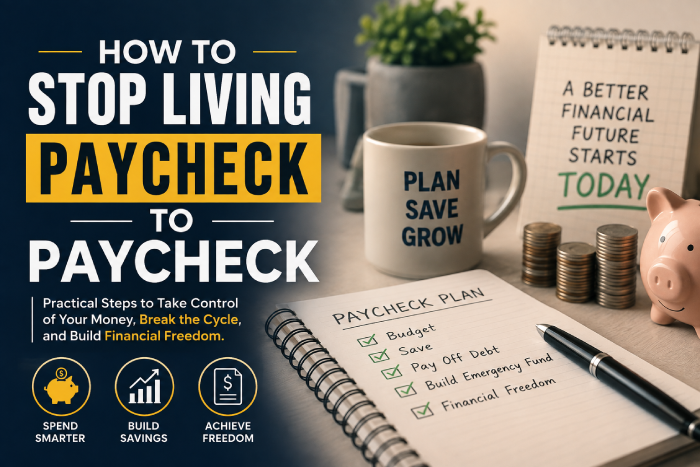
Living paycheck to paycheck can make every month feel like a race against the clock. Your paycheck arrives, bills get paid, everyday expenses take their share, and suddenly you’re waiting for the next payday again.
The good news is that you don’t have to completely change your life overnight to start breaking this cycle. With a clear plan, better awareness of your spending, and a few consistent habits, you can gradually create more breathing room in your finances.
Understand Where Your Money Is Going
The first step toward improving your financial situation is knowing exactly where your money goes.
For one month, track your income and expenses. Include everything from rent and utilities to groceries, subscriptions, eating out, transportation, and small purchases.
You may be surprised by how much money goes toward expenses that don’t seem significant individually.
The goal isn’t to judge your spending. It’s to understand it.
Once you can see where your money is going, you can start making intentional decisions instead of wondering where your paycheck disappeared.
Separate Needs From Wants
Not every expense has the same level of importance.
Start by separating your expenses into three categories:
- Essential expenses
- Important but flexible expenses
- Non-essential spending
Essential expenses may include housing, utilities, groceries, transportation, and other necessary bills.
Flexible expenses might include entertainment, dining out, shopping, or subscriptions.
This doesn’t mean you need to eliminate everything you enjoy. Instead, it helps you identify areas where you have the ability to adjust your spending when necessary.
Give Every Paycheck a Purpose
One of the biggest mistakes people make is treating their paycheck as one large amount of money that can be spent throughout the month.
Instead, give your money a job before you spend it.
Decide how much needs to go toward bills, groceries, savings, debt payments, and personal spending.
When your money has a purpose, you’re less likely to spend it impulsively.
Start With a Small Emergency Fund
You don’t need thousands of dollars in savings before your emergency fund becomes useful.
Start small.
Your first goal could be $100, then $250, then $500. Once you reach one milestone, work toward the next.
Even a small financial cushion can help you handle unexpected expenses without immediately relying on credit cards or loans.
Look for Small Expenses You Can Reduce
You don’t necessarily need to make dramatic lifestyle changes.
Look for recurring expenses that provide little value.
Unused subscriptions, frequent food delivery, unnecessary shopping, and impulse purchases can quietly consume a significant portion of your income.
Choose a few expenses to reduce rather than trying to eliminate everything at once.
Small changes are easier to maintain.
Build a Plan Around Your Actual Paycheck
A financial plan should work with the money you actually receive—not an ideal version of your income.
Start with your take-home pay and build your spending plan from there.
Know what bills are due, what expenses are coming up, and how much you want to save before the paycheck arrives.
The more predictable your financial routine becomes, the less stressful your money can feel.
Give Yourself Time
Breaking the paycheck-to-paycheck cycle doesn’t happen overnight.
There may be months when unexpected expenses disrupt your plan. That’s normal.
The goal isn’t perfection. The goal is progress.
Every time you save a little, avoid unnecessary debt, reduce an unnecessary expense, or plan ahead for a bill, you’re moving in the right direction.
Final Thoughts
Living paycheck to paycheck can feel like there is no way forward, but your financial situation can change when you begin creating a plan and following it consistently.
Start by understanding your spending, prioritizing your needs, assigning a purpose to each paycheck, and building even a small emergency fund.
You don’t need to fix everything today.
You simply need to take the next step.
Ready to create a clearer plan for your money? Explore The One Paycheck Plan and start building a financial routine that works for you.